
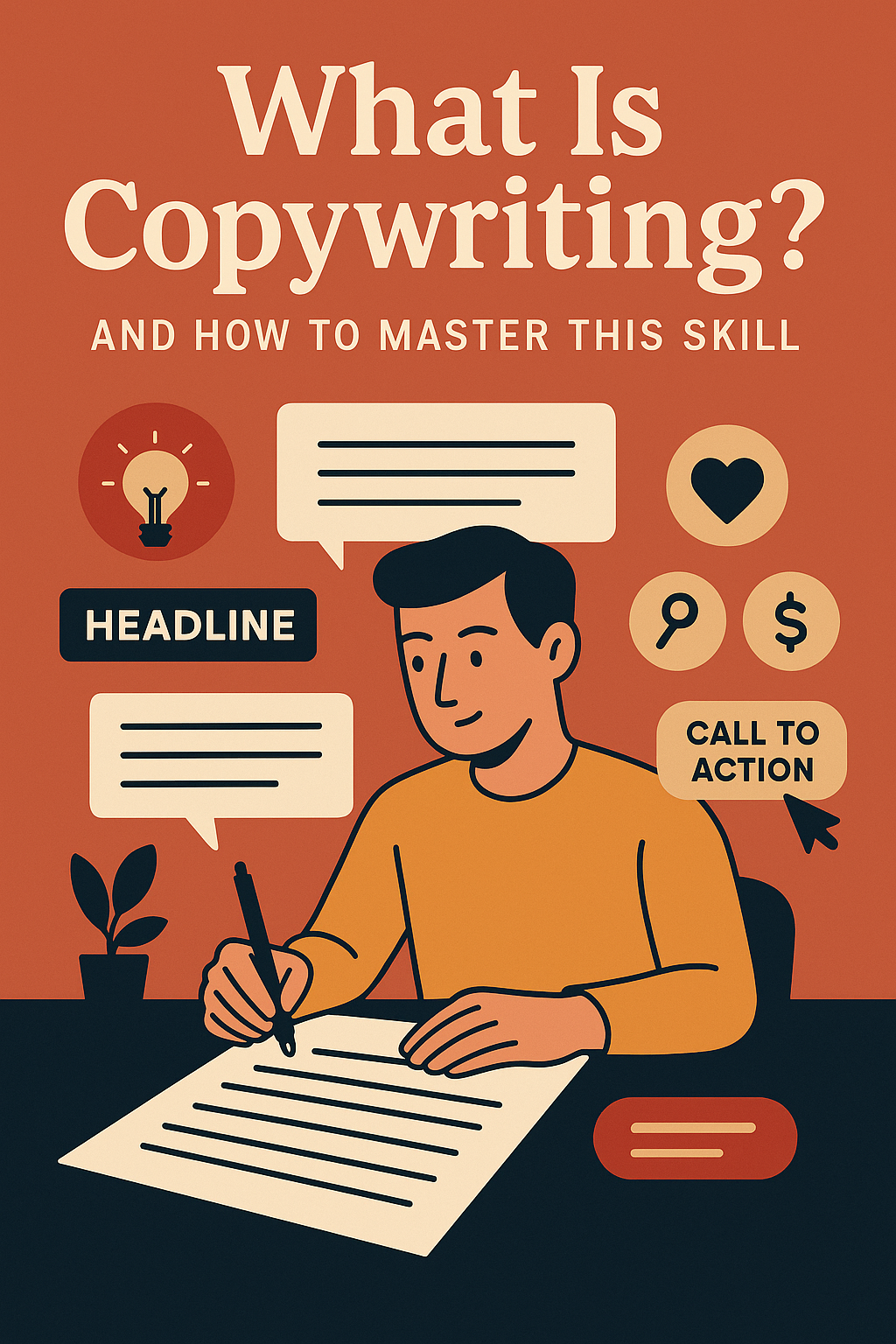
In today’s digital world, businesses and individuals alike rely on persuasive writing to engage audiences, sell products, and build brand awareness. This is where copywriting comes in. Whether you’re writing ads, sales pages, email campaigns, or website content, copywriting is a critical skill that blends creativity with strategy to inspire action.
In this article, we’ll explore what copywriting is, why it’s important, and how you can develop and master this powerful skill.
Understanding What Copywriting Is
Copywriting is the art and science of writing text—known as copy—with the goal of persuading readers to take a specific action. These actions might include:
- Buying a product
- Subscribing to a newsletter
- Clicking on a link
- Signing up for a service
- Downloading an ebook
Unlike general content writing, which often aims to inform or entertain, copywriting is always action-oriented. It’s about converting readers into customers, followers, or leads.
The Different Types of Copywriting
1. Advertising Copywriting
Focuses on creating text for advertisements, including Google Ads, Facebook Ads, and print media.
2. Website Copywriting
Involves writing web pages such as homepages, about pages, product descriptions, and landing pages.
3. Email Copywriting
Crafts engaging emails for marketing campaigns, promoting products, nurturing leads, or announcing updates.
4. Social Media Copywriting
Tailors messages for social platforms like Instagram, LinkedIn, and Twitter to drive engagement and conversions.
5. SEO Copywriting
Combines persuasive writing with search engine optimization (SEO) techniques to rank higher on Google and attract organic traffic.
The Key Elements of Effective Copywriting
Clear Understanding of Your Audience
Before writing, know who your readers are. What are their pain points, desires, fears, and motivations? The more you understand your audience, the better you can tailor your message.
Compelling Headlines
Your headline is your first (and sometimes only) chance to grab attention. A great headline arouses curiosity, promises a benefit, or provokes an emotional reaction.
Examples of compelling headlines:
- “Discover the Secret to Glowing Skin”
- “5 Simple Steps to Double Your Sales Today”
Strong Value Proposition
Make it clear why the reader should care. Answer the question: “What’s in it for me?”
Emotional Triggers
People often make decisions based on emotions rather than logic. Use emotional appeals to connect with readers on a deeper level.
Common emotional triggers include:
- Fear of missing out (FOMO)
- Desire for success
- Need for security
- Desire for love or belonging
Clear Call-to-Action (CTA)
Tell your reader exactly what to do next. Whether it’s “Buy Now,” “Subscribe Today,” or “Learn More,” your CTA should be clear, concise, and persuasive.
How to Develop Copywriting Skills
1. Study Successful Copy
Read ads, sales pages, and marketing emails from top brands. Analyze what makes their copy effective.
2. Practice Regularly
The more you write, the better you get. Set aside time each day to write headlines, short ads, or landing page drafts.
3. Learn Basic Psychology Principles
Understanding human psychology helps you craft messages that resonate emotionally and intellectually with your audience.
4. Focus on Benefits, Not Features
Instead of just listing product features, highlight how those features benefit the user.
Example:
- Feature: “This laptop has 16GB of RAM.”
- Benefit: “Run multiple apps smoothly without slowdowns.”
5. Master the Art of Storytelling
People love stories. Weave short, relatable stories into your copy to build connection and trust.
6. Use Persuasive Language
Incorporate power words that evoke action and emotion. Words like “exclusive,” “proven,” “instant,” and “guaranteed” grab attention and motivate readers.
Common Mistakes New Copywriters Make
- Being too vague: Avoid generalizations and use specific, detailed language.
- Using jargon: Write in simple, accessible language your audience understands.
- Neglecting the reader’s needs: Always focus on what the reader wants, not just what you want to say.
- Weak calls-to-action: Don’t leave the reader wondering what to do next.
Tools That Can Help You as a Copywriter
- Grammarly: For grammar and tone checking.
- Hemingway App: To make your writing clearer and more concise.
- Google Keyword Planner: For SEO-focused copywriting.
- Headline Analyzer Tools: To optimize headlines for engagement.
Building a Career in Copywriting
If you want to turn copywriting into a career, here are a few steps:
- Create a Portfolio: Even if you’re just starting, write sample pieces to showcase your skills.
- Take Online Courses: Platforms like Coursera, Udemy, and LinkedIn Learning offer excellent copywriting courses.
- Freelance Platforms: Start by offering your services on sites like Upwork, Fiverr, or Freelancer.com.
- Network with Other Writers: Join online copywriting groups and communities for support and opportunities.
The Long-Term Benefits of Mastering Copywriting
Learning copywriting doesn’t just help you write better ads or sales pages. It also sharpens your communication skills, improves your ability to persuade others, and opens doors to lucrative freelance or in-house marketing careers.
By practicing regularly, studying successful examples, and focusing on your reader’s needs, you’ll develop the ability to write copy that not only informs but also converts.