
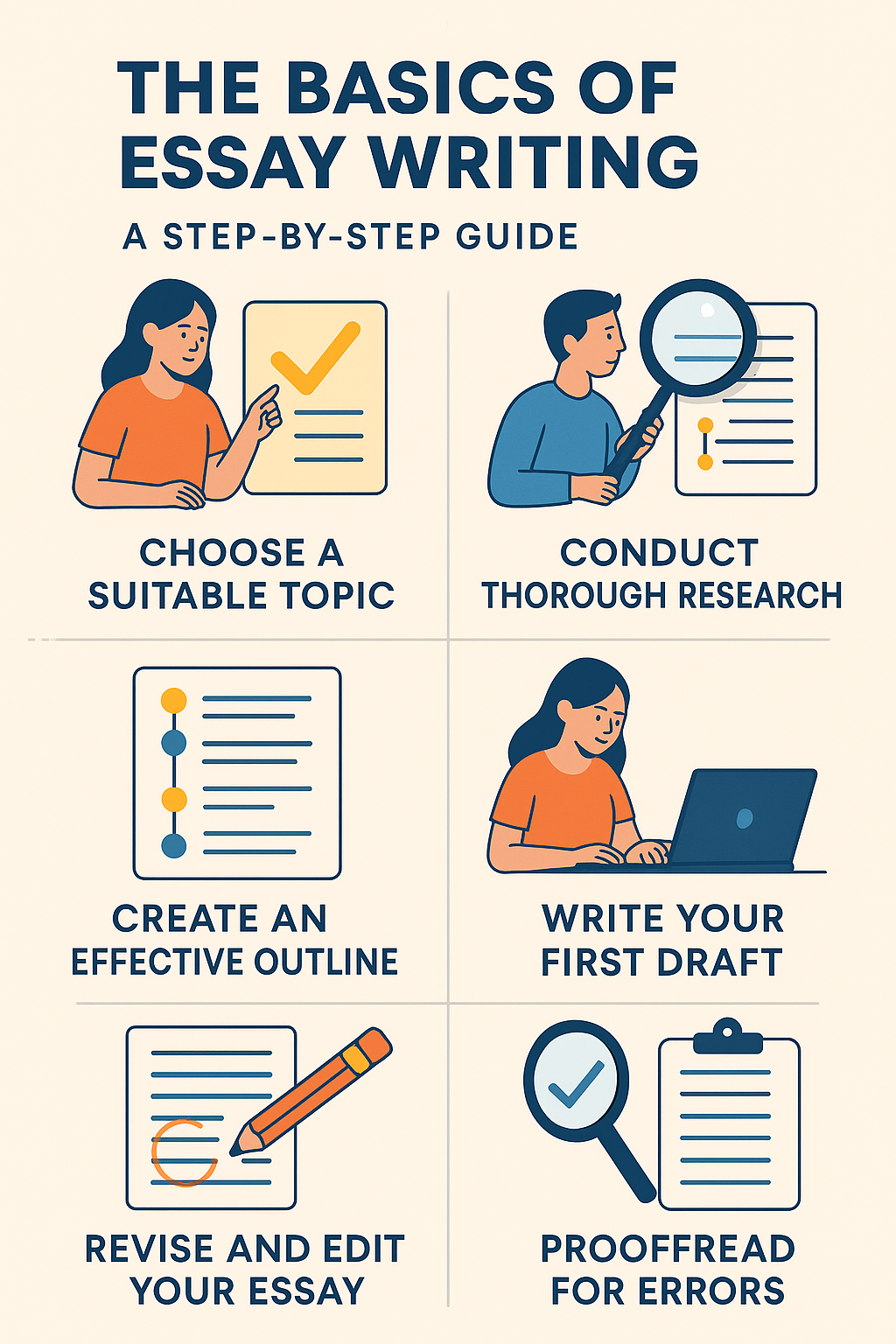
Essay writing is a fundamental skill that every student and writer should master. Whether you’re preparing for academic assignments, professional tasks, or personal projects, understanding how to structure and present your ideas effectively is essential. This guide will take you through each stage of the essay writing process, making it easier for you to produce clear, coherent, and compelling essays.
Understanding the Purpose of an Essay
Before you begin writing, it’s important to understand the purpose of your essay. Are you trying to inform, persuade, analyze, or entertain? Different types of essays serve different functions. Common types include:
- Narrative Essays: Tell a story or describe an event.
- Descriptive Essays: Focus on detailing a person, place, object, or event.
- Expository Essays: Provide information or explain a topic.
- Persuasive Essays: Convince the reader of a particular viewpoint.
- Analytical Essays: Break down an issue or idea into parts and analyze them.
Knowing your essay’s purpose will guide your tone, style, and structure.
Choosing a Suitable Topic
If your essay allows you to choose your own topic, select something that interests you and aligns with the assignment guidelines. A good topic should:
- Be specific and focused.
- Have enough available resources for research.
- Be appropriate for your audience.
Brainstorm several ideas before settling on the final topic. This helps ensure you choose something engaging and manageable.
Conducting Thorough Research
For most essays, especially academic and persuasive types, research is a crucial step. Use credible sources such as academic journals, books, reputable websites, and expert opinions.
As you research, take detailed notes and keep track of your references. This will make the citation process easier later on and help you avoid plagiarism.
Creating an Effective Outline
An outline is like a roadmap for your essay. It helps organize your thoughts and ensures logical flow. A typical essay outline includes:
- Introduction
- Body Paragraphs
- Conclusion
Let’s break these down further:
Introduction
Start with a hook to grab the reader’s attention. This could be a quote, a question, a surprising fact, or a brief anecdote. After the hook, introduce your topic and present your thesis statement—a clear sentence that summarizes the main point or argument of your essay.
Body Paragraphs
Most essays have at least three body paragraphs. Each paragraph should focus on a single idea that supports your thesis.
Structure for each body paragraph:
- Topic sentence: Introduces the main idea of the paragraph.
- Supporting details: Facts, examples, or arguments that reinforce the topic sentence.
- Transition sentence: Leads smoothly to the next paragraph.
Conclusion
The conclusion summarizes your key points and restates the thesis in a new way. End with a strong closing sentence that leaves a lasting impression on the reader.
Writing the First Draft
Once your outline is ready, start writing your first draft. Don’t worry about making it perfect. Focus on getting your ideas down on paper.
Here are some tips for the drafting stage:
- Follow your outline closely.
- Maintain a consistent tone and voice.
- Use clear and concise language.
- Support your arguments with evidence from your research.
Remember, this is just the first version. You’ll have the opportunity to refine and improve it later.
Revising and Editing Your Essay
After completing your first draft, take a break before revising. Fresh eyes can help you spot issues more easily.
When revising:
- Check the structure: Does your essay have a clear introduction, body, and conclusion?
- Review content: Are your arguments logical and well-supported?
- Refine clarity: Is your language clear and engaging?
Next, move on to editing:
- Correct grammar, punctuation, and spelling mistakes.
- Ensure proper use of transitions between paragraphs.
- Check for wordiness and eliminate unnecessary words.
Reading your essay aloud can also help identify awkward phrasing and grammatical errors.
Proper Citation and Referencing
If your essay includes information from external sources, make sure to cite them correctly. Different academic fields use different citation styles, such as:
- APA (American Psychological Association)
- MLA (Modern Language Association)
- Chicago/Turabian Style
Refer to your assignment guidelines to determine which citation style to use.
Proper referencing not only gives credit to original authors but also adds credibility to your essay.
Proofreading for Final Touches
Before submitting or publishing your essay, do a final proofreading pass. Look for:
- Typographical errors
- Consistent formatting
- Proper citation placement
- Smooth flow of ideas
You can also ask a friend, teacher, or colleague to review your essay and provide feedback.
Tips for Continuous Improvement
Becoming a better essay writer takes practice. Here are some habits that can help you improve over time:
- Read a variety of essays to understand different writing styles.
- Practice writing regularly.
- Seek constructive criticism from peers and mentors.
- Participate in writing workshops or courses.
Every essay you write is an opportunity to refine your skills and express your ideas more effectively.
Final Thoughts: Building Confidence in Essay Writing
Essay writing doesn’t have to be intimidating. By following a clear, step-by-step approach, you can produce well-structured and persuasive essays on any topic.
Remember, good writing takes time, effort, and a willingness to revise and improve. With practice, you’ll find your voice and develop the confidence to tackle any writing assignment.