
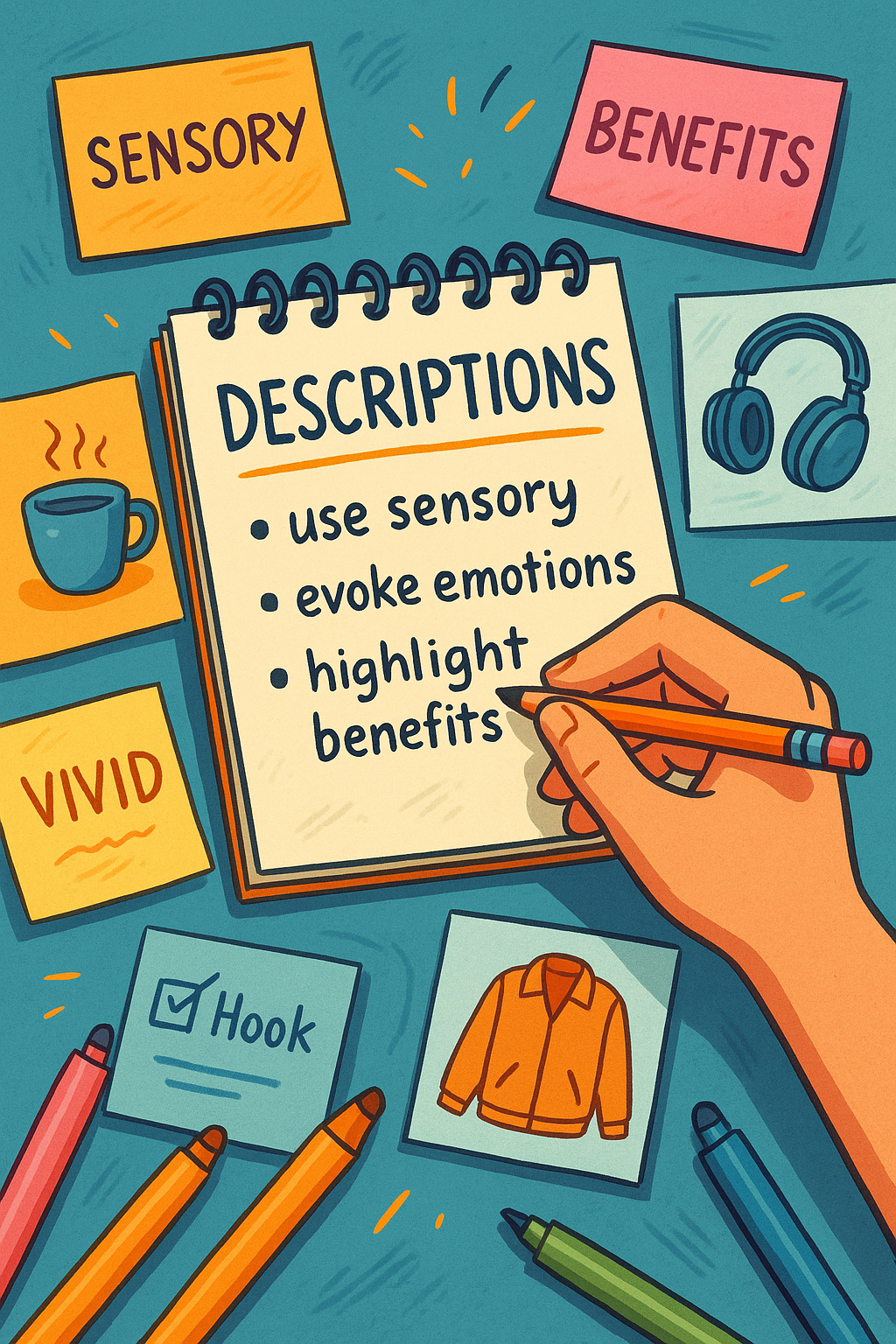
Whether you’re crafting product descriptions, blog posts, or social media captions, writing engaging descriptions is a vital skill. Well-written descriptions capture attention, spark imagination, and motivate readers to take action. In this article, you’ll learn practical techniques to make your descriptions more vivid, persuasive, and memorable.
Why Engaging Descriptions Matter
Strong descriptions:
- Evoke emotions
- Paint clear images in the reader’s mind
- Increase engagement and conversion rates
- Differentiate your content from competitors
In marketing, storytelling, and content creation, compelling descriptions can make the difference between gaining or losing a customer’s interest.
Key Elements of an Engaging Description
1. Use Sensory Language
Appeal to the reader’s senses: sight, sound, taste, touch, and smell. Sensory details help create vivid mental images and make your descriptions more immersive.
Example:
Instead of: “We sell coffee.”
Write: “Enjoy the rich aroma and bold flavor of freshly brewed coffee that awakens your senses every morning.”
2. Focus on Benefits, Not Just Features
Highlight how a product, place, or experience will make the reader feel or improve their life.
Example:
Instead of: “This jacket is waterproof.”
Write: “Stay warm and dry, no matter how heavy the rain, with our high-performance waterproof jacket.”
3. Use Powerful Adjectives and Verbs
Strong adjectives and action verbs add energy to your descriptions.
Weak: “The cake is nice and tasty.”
Better: “The cake is decadently rich with layers of velvety chocolate and a silky cream finish.”
4. Evoke Emotion
Tap into emotions like happiness, curiosity, excitement, or nostalgia to create a connection with your reader.
Example:
“Relive your childhood memories with our homemade apple pie, baked with love and a sprinkle of cinnamon.”
5. Incorporate Storytelling Elements
Tell a mini-story that draws readers in.
Example:
“Designed for the adventurer at heart, this backpack has traveled mountain trails, city streets, and sandy beaches—ready for your next journey.”
6. Use Comparisons and Metaphors
Make complex ideas simple and memorable by using similes and metaphors.
Example:
“Soft as a cloud, this blanket wraps you in comfort after a long day.”
7. Maintain a Consistent Tone and Voice
Your tone should match your brand or writing style. Whether playful, professional, or inspirational, consistency builds trust and engagement.
Example tones:
- Playful: “Say goodbye to boring socks—step into fun!”
- Professional: “Engineered with precision, our tools deliver superior performance.”
Structuring Effective Descriptions
Hook the Reader
Start with a sentence that grabs attention.
Example:
“Turn your daily commute into a music-filled adventure.”
Provide Details
Offer clear, specific, and relevant information.
Example:
“With 20-hour battery life and noise-canceling technology, these headphones keep you focused and entertained all day.”
Add a Call-to-Action (CTA)
Encourage the reader to act.
Example:
“Order now and experience sound like never before.”
Tips for Writing Descriptions That Sell
- Know Your Audience: Tailor your language and tone to what your audience finds appealing.
- Keep Sentences Concise: Long-winded descriptions can lose attention.
- Use Formatting for Readability: Bullet points and short paragraphs make your content easier to skim.
- Highlight Unique Selling Points (USPs): Focus on what makes your product, place, or idea stand out.
- Test Different Styles: Experiment with different tones, sentence structures, and formats to see what resonates best.
Common Mistakes to Avoid
- Being Too Generic: Generic descriptions fail to capture attention.
- Using Too Much Jargon: Keep your language simple and relatable.
- Ignoring SEO (for online content): Incorporate relevant keywords naturally to improve visibility.
- Overloading with Features: Always balance features with benefits.
- Neglecting the Emotional Element: Facts matter, but emotions drive decisions.
Practical Exercises to Improve Your Description Writing
- Rewrite Boring Descriptions: Take a dull description and rewrite it with sensory details and emotional appeal.
- Describe Everyday Objects: Practice describing common items (like a coffee mug or a pen) in engaging ways.
- Use the “Show, Don’t Tell” Technique: Instead of telling readers that something is beautiful or useful, show them why.
The Long-Term Benefits of Mastering Descriptive Writing
Strong descriptive writing enhances all forms of communication—from marketing materials to creative storytelling. It increases reader engagement, improves conversion rates, and leaves a lasting impression.
By applying these techniques consistently, your descriptions will captivate readers and inspire action.