
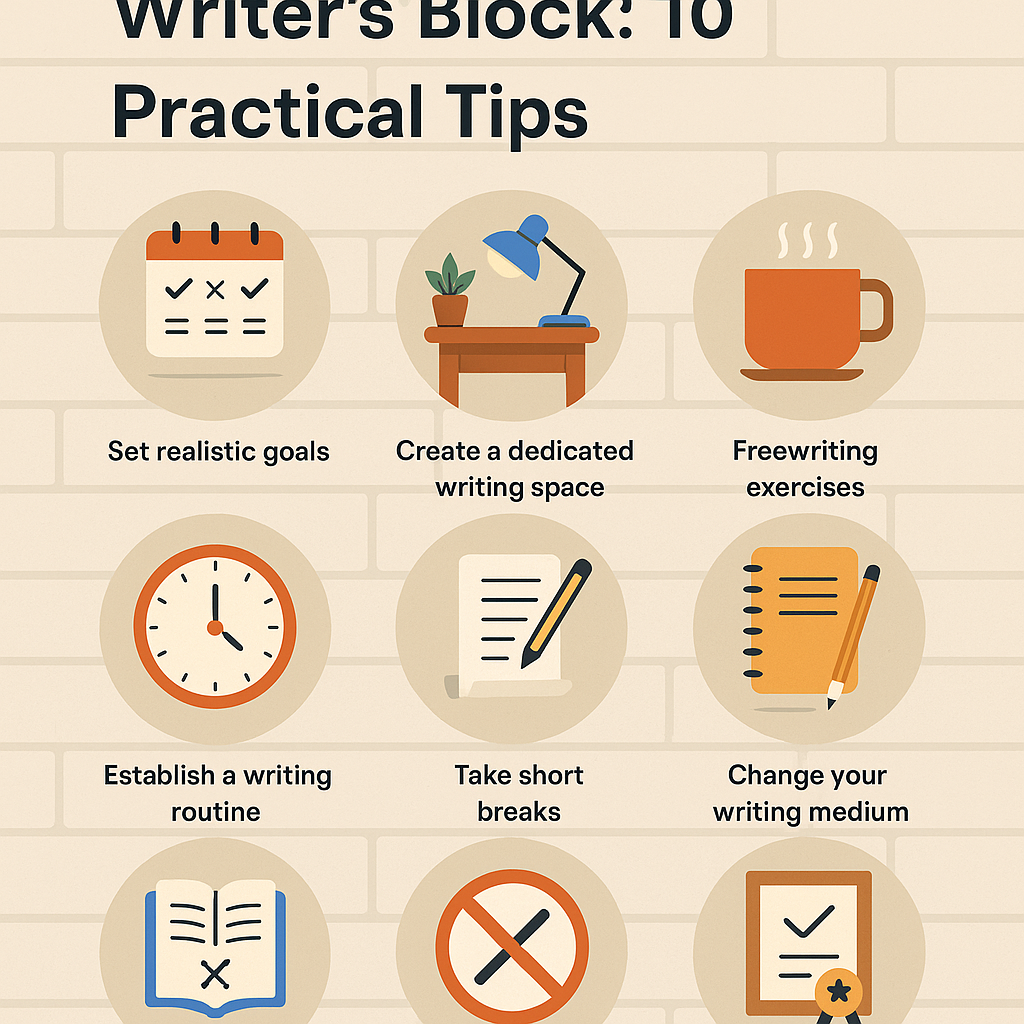
Understanding Writer’s Block
Writer’s block is a common challenge that almost every writer faces at some point. It refers to the inability to produce new work or come up with fresh ideas, no matter how hard you try. This mental block can happen to beginners and experienced writers alike, making it difficult to start or complete a piece of writing.
Several factors can contribute to writer’s block, including stress, self-doubt, perfectionism, lack of motivation, or even external distractions. The good news is that it’s possible to overcome this hurdle with practical strategies that help restore creativity and productivity.
In this article, we’ll explore 10 actionable tips to help you break through writer’s block and get back to writing with confidence.
1. Set Realistic Goals
One of the biggest contributors to writer’s block is setting unrealistic expectations. Trying to write a perfect article in one sitting or completing an entire chapter in a single day can create unnecessary pressure.
Instead, break your writing tasks into smaller, manageable goals. For example, aim to write just 100 words or spend 15 minutes brainstorming ideas. Achieving small milestones can boost your motivation and reduce feelings of overwhelm.
2. Create a Dedicated Writing Space
Your environment plays a crucial role in your productivity. Writing in a cluttered or noisy space can hinder your focus and creativity. Designate a specific area for writing, free from distractions.
Consider adding elements that inspire you, such as plants, motivational quotes, or soft background music. A comfortable and organized space can make writing more enjoyable and less stressful.
3. Establish a Writing Routine
Consistency is key when it comes to writing. Establishing a daily or weekly writing routine helps train your brain to expect writing sessions at specific times.
Choose a time of day when you feel most focused and creative. Whether it’s early in the morning or late at night, sticking to a routine can make writing a natural part of your schedule.
4. Freewriting Exercises
Freewriting is a powerful technique to unlock creativity. Set a timer for 10 to 15 minutes and write continuously without worrying about grammar, spelling, or coherence. The goal is to let your thoughts flow freely.
Freewriting helps clear mental clutter and often leads to unexpected ideas that can spark inspiration for your main project.
5. Take Short Breaks
Sometimes, stepping away from your writing can do wonders for your creativity. Take short breaks to refresh your mind. Go for a walk, do some stretching exercises, or simply relax with a cup of tea.
Physical movement increases blood flow to the brain, which can help generate new ideas and perspectives when you return to writing.
6. Change Your Writing Medium
If you usually type on a computer, try switching to pen and paper. Alternatively, use a voice recorder to speak your thoughts aloud.
Changing your writing medium can stimulate different areas of your brain and help overcome mental blocks. This simple shift often leads to a fresh approach to your writing task.
7. Read for Inspiration
Reading books, articles, or essays in your niche can reignite your passion for writing. Pay attention to the author’s tone, style, and structure.
Highlight phrases that resonate with you or take notes on interesting ideas. Consuming quality content often triggers new thoughts and encourages you to start writing again.
8. Eliminate Distractions
Digital distractions are a common enemy for writers. Silence unnecessary notifications, close unused browser tabs, and consider using productivity apps that block distracting websites during writing sessions.
Setting your phone on silent mode or using “Do Not Disturb” features can help maintain focus.
9. Embrace Imperfection
Perfectionism is a major contributor to writer’s block. Remember, your first draft doesn’t need to be flawless. Allow yourself to write freely, knowing you’ll have the opportunity to edit and refine later.
Focus on getting your ideas down on paper without self-judgment. The editing phase is where you can polish your work.
10. Set Deadlines and Reward Yourself
Setting realistic deadlines creates a sense of urgency and accountability. Even self-imposed deadlines can motivate you to complete tasks on time.
After reaching your writing goal, reward yourself with something enjoyable—a favorite snack, a short walk, or some relaxation time. Positive reinforcement makes the writing process more enjoyable and sustainable.
Finding Your Flow Again
Writer’s block may feel frustrating, but it’s a temporary challenge. By applying these practical tips and adjusting your approach, you can overcome creative blocks and regain your writing momentum.
Remember, every writer faces this hurdle at some point. With patience, consistency, and self-compassion, you’ll find your flow and continue creating meaningful and engaging content.