
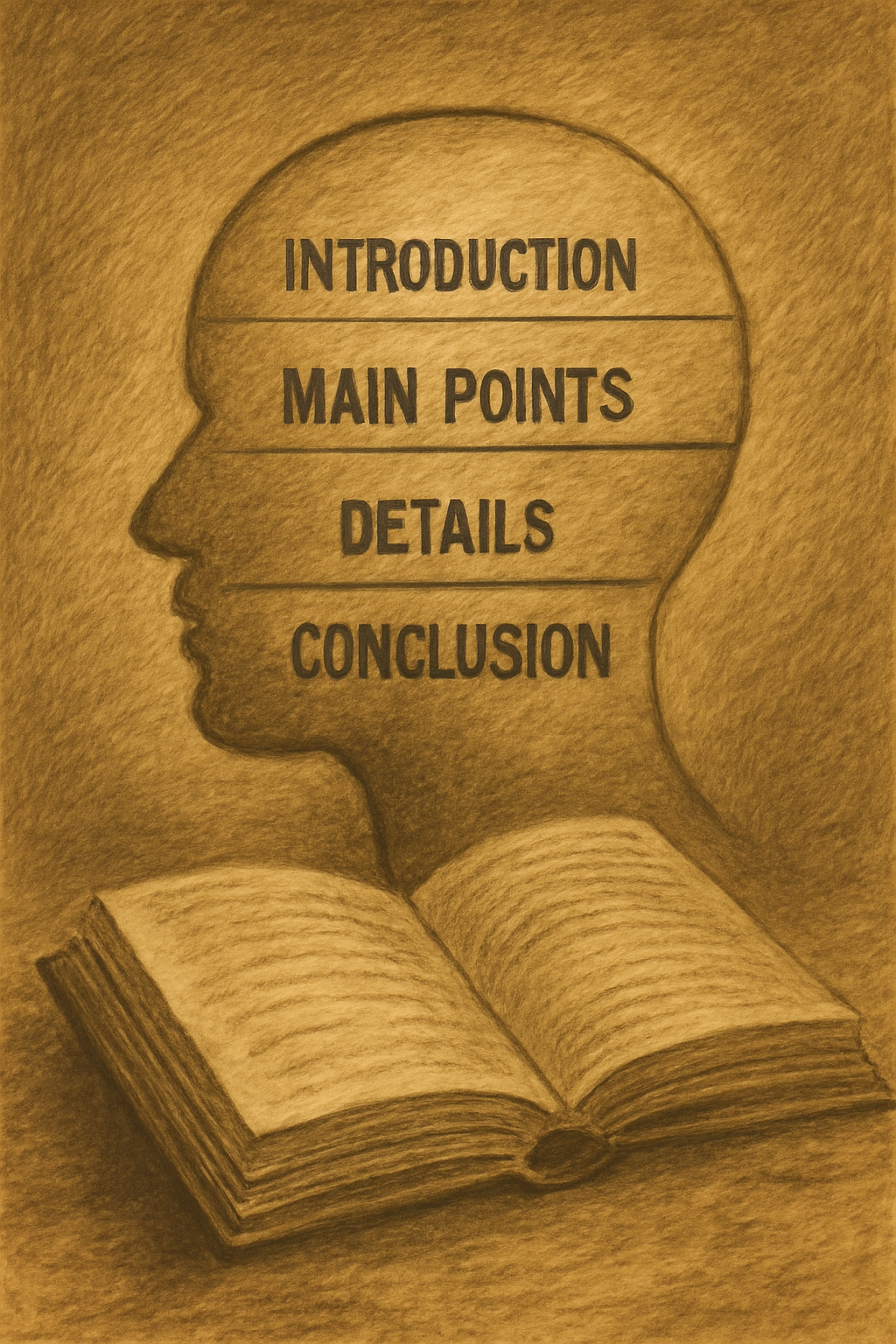
Effective writing isn’t just about stringing words together—it’s about structuring those words in a way that communicates your ideas clearly, logically, and persuasively. Whether you’re writing an essay, an article, a novel, or even a business report, the way you organize your writing has a huge impact on how your audience receives it.
In this article, you’ll learn how to organize your writing for maximum impact by applying various strategies that will make your work clearer, more engaging, and more effective.
Why Organization Matters in Writing
Well-organized writing:
- Helps your audience follow your ideas easily
- Makes your content more persuasive and compelling
- Increases readability and engagement
- Allows you to present ideas logically and coherently
- Makes your writing appear more professional and polished
Disorganized writing, on the other hand, can confuse your readers, weaken your arguments, and create unnecessary complexity.
How to Organize Your Writing
1. Plan Your Content Before You Write
A well-thought-out plan is the first step to organizing your writing. Spend time thinking about your topic, audience, and purpose before diving into the actual writing process. Creating an outline can help you visualize the structure of your work.
Steps for planning:
- Identify your main point or thesis: What is the key message or idea you want to convey?
- Decide on your structure: Will your content be in a list format, a narrative, or a series of arguments?
- Break your writing into sections: Determine the main points or themes for each section.
Tip:
When writing an article, your structure might look like:
- Introduction
- Main points (e.g., Argument 1, Argument 2)
- Counterarguments (if applicable)
- Conclusion
2. Use Clear and Concise Paragraphs
Each paragraph should focus on a single idea or argument. This allows the reader to easily follow your logic and prevents information from getting lost or jumbled together.
How to structure paragraphs:
- Start with a topic sentence: This sentence should summarize the point of the paragraph.
- Provide supporting evidence: Use facts, examples, or quotes to back up your argument.
- Conclude or transition to the next point: End the paragraph with a sentence that either summarizes the point or smoothly transitions into the next idea.
3. Write in a Logical Sequence
Your ideas should flow logically from one to the next. Start with the most important or foundational ideas and build upon them. Use transitional phrases to guide your reader from one thought to the next, making it easier for them to follow your argument.
Examples of transition words:
- Addition: Furthermore, Moreover, Additionally
- Cause and effect: Therefore, As a result, Consequently
- Contrast: However, On the other hand, In contrast
- Summarizing: In conclusion, To summarize
Tip:
When writing an essay, you might start with an introduction, followed by supporting points, a counterpoint, and end with a conclusion. Ensure each section naturally leads to the next.
4. Use Subheadings to Organize Your Writing
Subheadings are crucial for breaking up long blocks of text, making it easier for readers to navigate your content. They also make your work more visually appealing and help your audience understand the structure of your content at a glance.
How to use subheadings effectively:
- Make them descriptive: Subheadings should clearly convey what each section will cover.
- Keep them short: A short, to-the-point subheading is more effective than a long one.
- Use hierarchy: If your content has multiple levels, use numbered or bulleted subheadings.
Example:
For an article on writing techniques, your subheadings might be:
- The Importance of Structure in Writing
- How to Organize Your Ideas
- Common Organizational Pitfalls to Avoid
5. Create a Strong Introduction and Conclusion
Your introduction and conclusion are the bookends of your writing. The introduction sets the tone and introduces the reader to your topic, while the conclusion wraps up your ideas and leaves a lasting impression.
- Introduction: Start with a hook that grabs attention, provide context, and clearly state your thesis.
- Conclusion: Summarize your main points and restate the importance of your message. End with a call to action or thought-provoking idea.
6. Use Lists for Clarity
Lists are a great way to present information in an easy-to-read format. Bullet points and numbered lists help break up complex ideas and make them more digestible for the reader.
When to use lists:
- When presenting multiple points or steps
- When summarizing key takeaways
- When comparing or contrasting ideas
Example:
5 Key Tips for Organizing Your Writing:
- Plan your content in advance
- Use clear and concise paragraphs
- Ensure logical sequencing of ideas
- Utilize subheadings to break up the text
- Start with a strong introduction and end with a conclusion
7. Revise and Edit for Organization
Once you’ve written your first draft, revisit it to check for organizational clarity. Look at your content as a whole and ask yourself:
- Does it flow logically from one point to the next?
- Are my paragraphs clearly focused on one idea?
- Have I used enough transitions to connect ideas?
Tip:
Don’t hesitate to reorganize sections, move paragraphs around, or cut out irrelevant information to improve the overall structure.
8. Be Consistent with Your Formatting
Consistency in formatting not only makes your work look professional but also improves readability. Use the same font style, size, and spacing throughout your content, and maintain consistency in headings and subheadings.
Tip:
If you’re working in a word processor like Microsoft Word or Google Docs, use the “Styles” feature to apply consistent formatting to headings and text.
Common Mistakes to Avoid
- Jumping between unrelated ideas: Make sure your ideas follow a logical sequence.
- Overloading paragraphs with too many ideas: Stick to one main idea per paragraph.
- Neglecting transitions: Use transitions to help your reader follow your argument.