
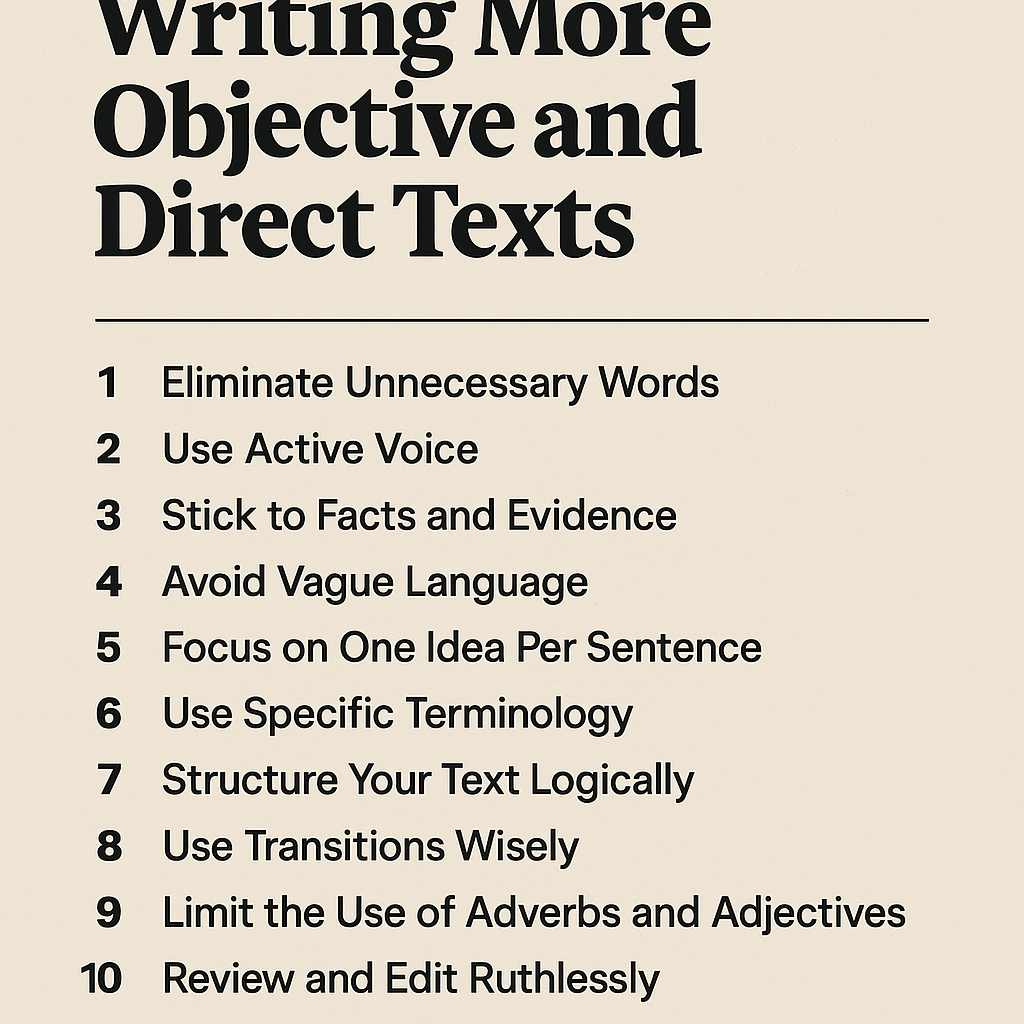
In both professional and academic settings, clarity and objectivity are key elements of effective communication. Writing objectively and directly allows readers to quickly grasp the main ideas, follow the reasoning, and engage with the content without confusion. Mastering this writing style is especially important for business reports, academic papers, web content, and technical documentation. In this article, we’ll explore proven techniques to make your writing more objective and direct.
Understanding Objectivity in Writing
Objectivity in writing means presenting information in a neutral, unbiased, and factual manner. This writing style avoids personal opinions, emotional language, and unsubstantiated claims. Objective writing focuses on evidence, logical reasoning, and clarity.
Some characteristics of objective writing include:
- Use of factual data and verified sources
- Avoidance of emotional language
- Clear definitions of terms and concepts
- Logical structure and flow
The Importance of Being Direct
Direct writing means getting straight to the point. It’s about using simple, clear language that communicates your ideas without unnecessary words or overly complex sentences. This technique is especially valuable when writing for audiences who need quick answers or solutions.
Benefits of direct writing include:
- Improved readability
- Better audience engagement
- Reduced risk of misinterpretation
- Increased impact of your key messages
Techniques for Writing More Objective and Direct Texts
1. Eliminate Unnecessary Words
Wordy sentences can dilute your message and confuse your reader. Always aim to remove redundant words and phrases.
Before:
“In order to be able to effectively solve the issue, we need to make a decision regarding the next steps.”
After:
“We need to decide the next steps to solve the issue.”
2. Use Active Voice
Active voice makes your writing stronger and clearer. It emphasizes the subject performing the action.
Passive voice:
“The report was written by the manager.”
Active voice:
“The manager wrote the report.”
3. Stick to Facts and Evidence
Support your statements with data, examples, and research findings rather than subjective opinions.
Subjective:
“I believe this solution works best.”
Objective:
“According to recent studies, this solution produced the best results.”
4. Avoid Vague Language
Vague words weaken your arguments and make your writing less impactful.
Vague:
“Many people think this method is good.”
Clear:
“A survey of 500 respondents showed that 75% preferred this method.”
5. Focus on One Idea Per Sentence
Each sentence should convey a single, clear idea. Avoid cramming multiple thoughts into one sentence.
Poor:
“The project is going well and the team is also working on new features that will improve the user experience which is important for customer satisfaction.”
Better:
“The project is progressing well. The team is also developing new features to improve user experience and increase customer satisfaction.”
6. Use Specific Terminology
When writing for a specialized audience, use industry-specific terminology appropriately. For a general audience, explain any technical terms you use.
For experts:
“The API’s latency has been reduced by 30%.”
For general audience:
“The time it takes for the system to respond has been reduced by 30%.”
7. Structure Your Text Logically
Use headings, bullet points, and short paragraphs to organize your content. A clear structure helps readers navigate and absorb the information.
- Start with an introduction that outlines your topic.
- Follow with main sections, each addressing a specific point.
- Conclude with a summary or actionable takeaway.
8. Use Transitions Wisely
Smooth transitions guide your reader from one point to the next, maintaining flow and coherence.
Common transition words and phrases include:
- Therefore
- Furthermore
- However
- In addition
- On the other hand
9. Limit the Use of Adverbs and Adjectives
While modifiers can add color, excessive use can make writing vague or exaggerated. Stick to strong nouns and verbs to convey meaning more precisely.
Before:
“The software performed incredibly well in a very effective and efficient manner.”
After:
“The software performed efficiently.”
10. Review and Edit Ruthlessly
First drafts are rarely perfect. Take time to revise your text, cutting unnecessary words, clarifying vague statements, and tightening your language.
A good editing process includes:
- Reading aloud to check flow
- Using grammar and readability tools
- Getting feedback from peers or editors
Common Mistakes to Avoid
While striving for objectivity and directness, be cautious not to fall into these traps:
- Over-simplification: Cutting too much can remove important context.
- Tone that’s too blunt: Direct writing shouldn’t come across as rude or dismissive.
- Neglecting audience needs: Tailor your language level and detail to suit your readers.
Applying These Techniques in Different Contexts
Business Communication
In emails, reports, and proposals, direct and objective language helps avoid miscommunication and supports decision-making.
Academic Writing
Objective tone is essential in research papers and dissertations, where credibility and clarity matter most.
Blogging and Content Creation
Even when writing for the web, being direct ensures better engagement and user satisfaction, especially for readers seeking quick answers.
Final Thoughts on Writing with Clarity and Objectivity
Becoming a master of objective and direct writing takes practice, but the results are worth the effort. By focusing on clarity, structure, and factual support, you’ll craft texts that are easy to understand, persuasive, and impactful.
Whether you’re drafting professional emails, academic reports, or online content, applying these techniques will enhance the quality and effectiveness of your communication.