
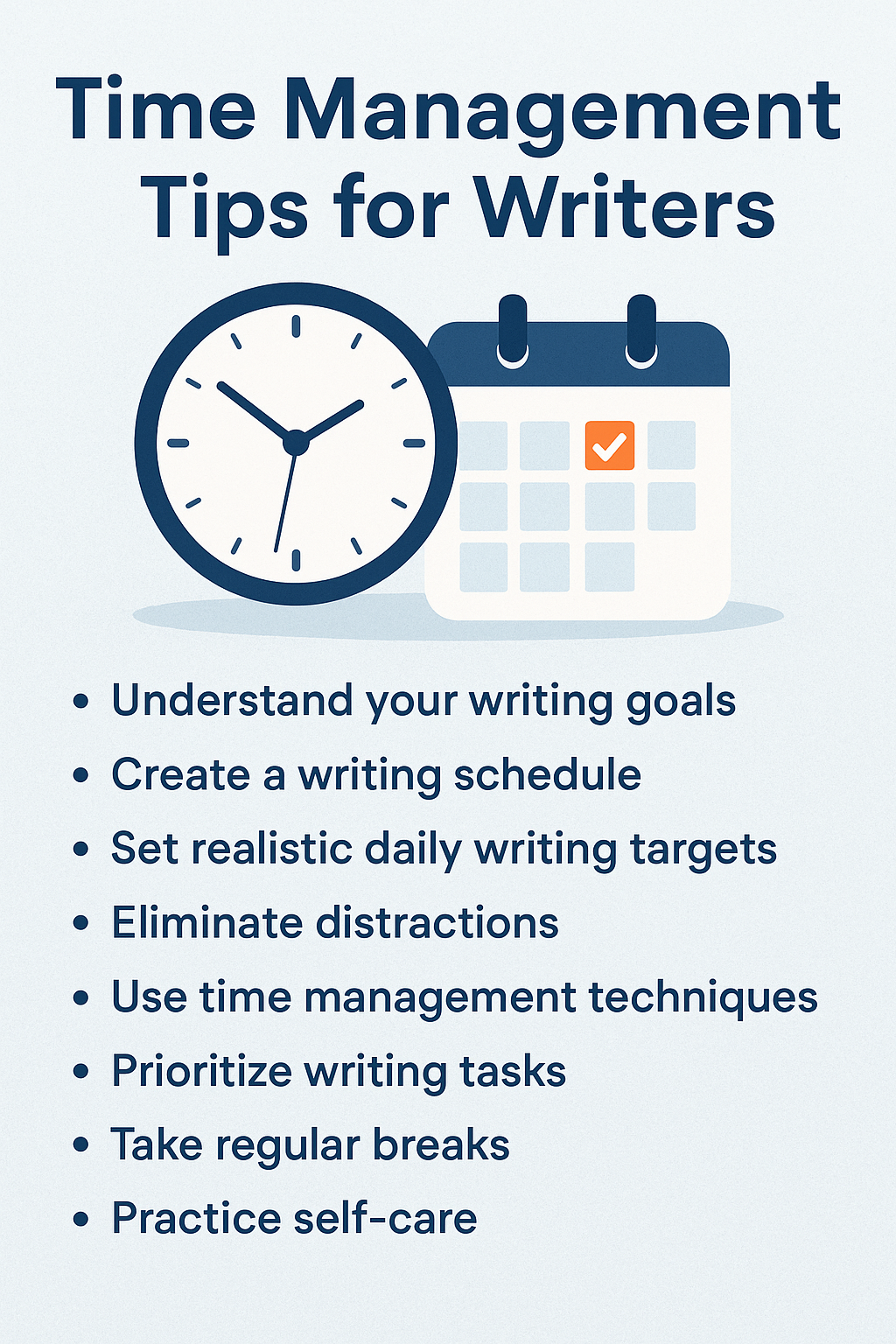
Time management is a crucial skill for writers who want to stay productive, meet deadlines, and maintain a healthy work-life balance. Whether you’re writing as a hobby, working on academic assignments, or managing professional content projects, effective time management helps you make the most of your writing sessions. In this article, we’ll explore practical time management tips specifically designed for writers.
Understand Your Writing Goals
Before creating a time management plan, clarify your writing goals. Ask yourself:
- What type of writing am I focusing on? (e.g., blog posts, fiction, academic papers)
- What deadlines do I need to meet?
- How many words or pages do I want to write daily or weekly?
- Am I writing for personal growth or professional purposes?
Setting clear goals gives you direction and motivation.
Create a Writing Schedule
A consistent writing schedule trains your brain to expect writing time and builds a productive habit.
Tips for scheduling:
- Choose specific days and times for writing.
- Treat writing appointments like important meetings.
- Start with short sessions (15-30 minutes) and gradually increase.
- Use calendar apps or planners to set reminders.
Consistency is more important than duration—writing regularly helps maintain momentum.
Set Realistic Daily Writing Targets
Setting achievable daily targets keeps you motivated and prevents burnout.
Examples:
- Write 300 words a day.
- Complete one page per session.
- Spend 30 minutes brainstorming or outlining.
Break larger projects into smaller milestones to track your progress easily.
Eliminate Distractions
Distractions can derail even the most motivated writers.
Tips to minimize distractions:
- Turn off notifications on your phone and computer.
- Use website blockers like Freedom or Cold Turkey during writing sessions.
- Find a quiet, dedicated writing space.
- Inform family or roommates of your writing schedule to minimize interruptions.
A distraction-free environment helps you focus and write more efficiently.
Use Time Management Techniques
Here are proven time management techniques suitable for writers:
The Pomodoro Technique
- Work for 25 minutes, then take a 5-minute break.
- Repeat the cycle four times, then take a longer break.
- This method improves concentration and reduces fatigue.
Time Blocking
- Allocate specific blocks of time for writing, editing, research, and breaks.
- Stick to your assigned time slots to build discipline.
The Two-Minute Rule
- If a task takes less than two minutes (e.g., responding to an email), do it immediately.
- This prevents small tasks from piling up and distracting you later.
Prioritize Writing Tasks
Not all writing tasks are equal. Prioritize your to-do list by importance and urgency.
Example priorities:
- Meeting client deadlines
- Submitting academic assignments
- Completing daily word count goals
- Editing and proofreading
Tackle high-priority tasks first to reduce stress and avoid last-minute rushes.
Break Large Projects into Smaller Tasks
Big projects can feel overwhelming. Divide them into manageable tasks.
For example, writing a research paper might include:
- Conducting research
- Outlining main sections
- Writing the introduction
- Drafting body paragraphs
- Writing the conclusion
- Editing and proofreading
Completing smaller tasks provides a sense of achievement and keeps you moving forward.
Track Your Progress
Monitoring your progress helps you stay motivated and accountable.
Ways to track:
- Use word count trackers.
- Keep a writing journal.
- Set weekly or monthly writing goals.
- Reward yourself for reaching milestones.
Review your progress regularly and adjust your goals as needed.
Take Regular Breaks
Writing for long periods without breaks can lead to mental fatigue.
Tips for breaks:
- Stand up and stretch.
- Take a short walk.
- Do breathing exercises.
- Listen to music or meditate.
Short breaks recharge your energy and improve focus.
Practice Self-Care
Your physical and mental well-being directly affect your writing productivity.
Self-care tips for writers:
- Get enough sleep.
- Stay hydrated.
- Eat nutritious meals.
- Exercise regularly.
- Practice mindfulness or relaxation techniques.
A healthy body and mind support consistent, high-quality writing.
Be Flexible but Committed
Life is unpredictable. There will be days when sticking to your schedule is difficult. That’s okay—allow yourself flexibility, but stay committed to returning to your routine.
If you miss a day:
- Don’t feel guilty.
- Reflect on what caused the disruption.
- Adjust your plan and continue writing the next day.
Final Thoughts: Mastering Your Writing Time
Time management for writers is about balance, consistency, and self-discipline. By setting clear goals, creating a routine, minimizing distractions, and taking care of yourself, you’ll improve your writing output and enjoy the process more.
Remember, every writer’s journey is unique. Find the time management strategies that work best for you and stay dedicated to your writing goals.