
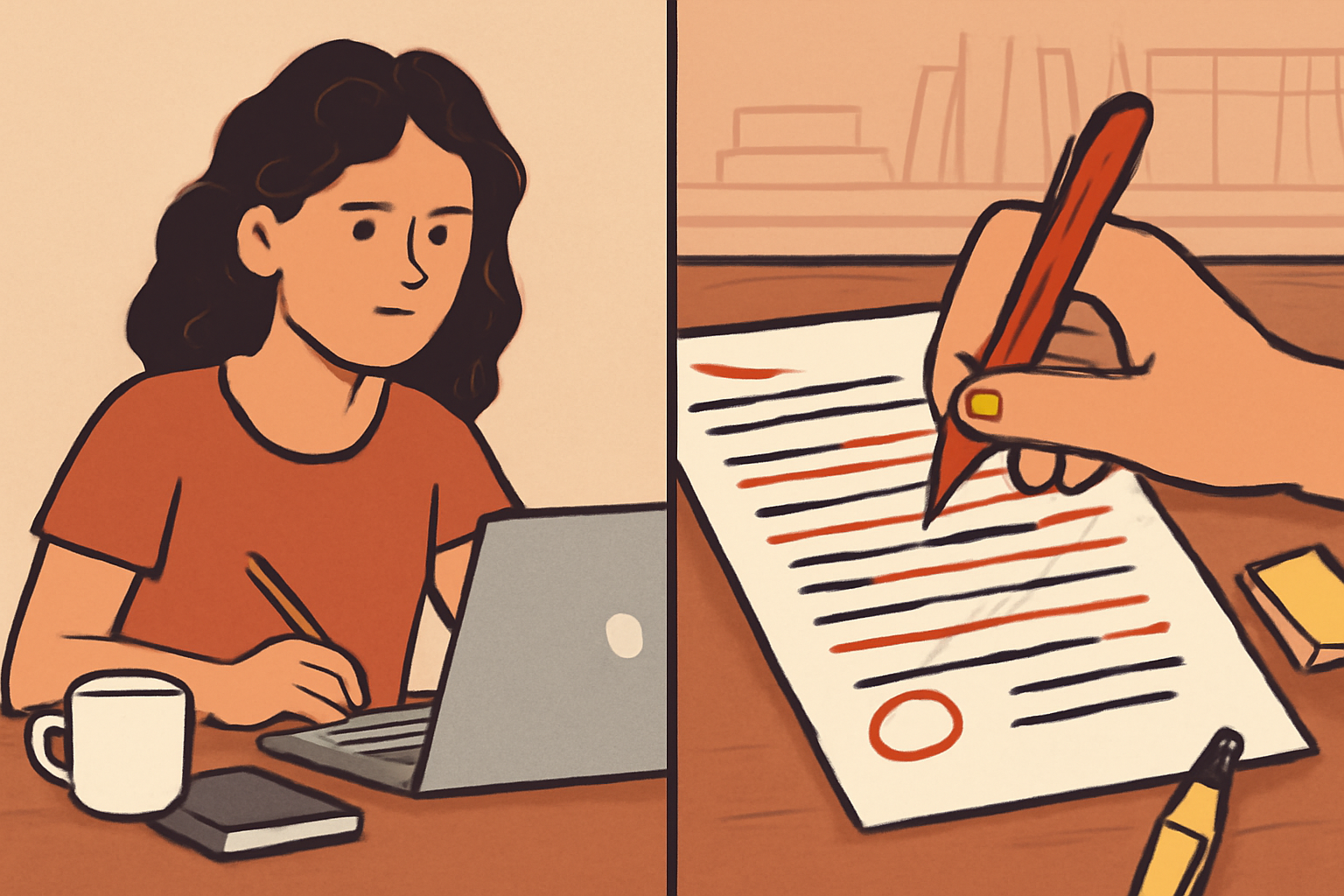
Writing and editing are two distinct but equally important stages in the content creation process. However, many writers struggle with balancing these tasks, often feeling the urge to edit while writing, which can slow down progress. On the other hand, rushing through the writing phase and leaving everything to be edited later can lead to disorganized and ineffective content.
In this article, we’ll explore how to balance writing and editing effectively to create a streamlined workflow that maximizes productivity while ensuring high-quality content.
Why Balancing Writing and Editing Is Important
Both writing and editing serve critical purposes:
- Writing: This phase is about getting your ideas down on paper. It’s a free-flowing process where you allow your thoughts and creativity to come to life without worrying about perfection.
- Editing: This phase is about refining your work. It involves reviewing and improving sentence structure, grammar, clarity, and overall coherence.
When these phases are balanced properly, you can:
- Improve your writing efficiency
- Avoid unnecessary distractions
- Produce higher-quality content in less time
- Prevent burnout by separating the creative and critical thinking processes
The key is learning how to manage both tasks effectively, giving each its due attention without letting one overwhelm the other.
Steps to Balance Writing and Editing
1. Write First, Edit Later
One of the most important rules to follow for a smooth writing process is to separate writing and editing. Don’t try to edit as you write, as it can disrupt the flow of ideas and slow down progress.
How to do it:
- Focus on getting the words down first. Let your creativity flow without worrying about grammar or structure.
- Once your draft is finished, step away from it for a bit. This will allow you to approach the editing process with fresh eyes.
- When you return to your draft, focus entirely on editing and improving the text. Don’t allow yourself to write new sections or make major changes during this phase.
Tip:
If you’re tempted to edit while writing, set a timer for 30 minutes to an hour. During this time, your only focus is to write. When the timer goes off, then you can switch to editing.
2. Set Clear Writing and Editing Goals
Set specific goals for both your writing and editing phases. This helps you stay focused and organized throughout the process.
Writing Goals:
- Decide how many words you want to write each day or within each session.
- Set clear objectives for each writing session, such as completing a chapter, section, or blog post.
Editing Goals:
- Set a goal to edit a specific portion of your content (e.g., one chapter, one section, or a set number of words).
- Focus on one aspect of editing at a time, such as grammar, sentence structure, or clarity.
Tip:
Track your progress with a writing and editing schedule or checklist. This will help you stay on track and see the progress you’re making.
3. Take Breaks Between Writing and Editing
Switching between writing and editing can be mentally exhausting, especially if you try to do both in the same session. To avoid burnout and maintain productivity, take breaks between each stage.
How to do it:
- After completing a writing session, take a short break (e.g., 10–15 minutes). This will help you recharge and prevent frustration.
- During your break, step away from your writing to refresh your mind, grab a snack, or do something unrelated to writing.
- When you return to your work, focus solely on editing.
Tip:
Taking breaks helps reset your brain and allows you to return to your writing or editing task with a clearer perspective.
4. Use Writing and Editing Tools to Enhance Efficiency
There are a variety of tools available that can help streamline both your writing and editing process. These tools can help you save time and ensure that your content is error-free.
For Writing:
- Scrivener: A great tool for organizing long-form writing like novels or research papers. It helps you structure your content, take notes, and keep track of your progress.
- Google Docs: A collaborative writing tool with a built-in grammar checker and cloud storage for easy access.
For Editing:
- Grammarly: An advanced grammar checker that provides real-time feedback on spelling, grammar, and writing style.
- Hemingway Editor: Helps improve readability by identifying complex sentences, passive voice, and overuse of adverbs.
- ProWritingAid: A comprehensive tool for editing grammar, style, and sentence structure.
Tip:
Use writing tools to help you stay organized, and editing tools to streamline the process of catching errors and improving your content.
5. Edit in Stages
Instead of editing everything in one go, break the process into stages. This will help you focus on specific areas and ensure your writing improves in a structured way.
Editing Stages:
- First pass: Focus on the overall structure and flow. Look at how well the paragraphs connect and whether your arguments are clear.
- Second pass: Focus on sentence structure and clarity. Make sure each sentence is clear and concise.
- Third pass: Focus on grammar, punctuation, and spelling. Fix any grammatical mistakes or typos that might distract the reader.
Tip:
Use a checklist for each editing stage so you don’t miss important elements during the revision process.
6. Know When to Step Away
Sometimes, the best way to balance writing and editing is to give yourself some distance from your work. If you’re too close to your content, it can be difficult to see mistakes or areas for improvement.
How to do it:
- After completing a writing session, take a break for a few hours or a day. This will help you come back to your work with fresh eyes.
- When you start editing, focus on revising major issues before fine-tuning smaller details like word choice or punctuation.
Tip:
Allowing time between writing and editing ensures you’ll spot mistakes or areas for improvement more easily.
7. Be Patient with Yourself
Balancing writing and editing can be challenging, and it takes time to develop an efficient workflow. Don’t rush through either stage; both writing and editing require patience and attention to detail.
How to do it:
- Set realistic expectations for yourself and your writing process.
- Understand that perfection takes time, and it’s okay to make mistakes during the writing phase.
- Give yourself the space to make revisions without rushing.
Tip:
Remember that writing is a process. Allow yourself time to improve and grow as a writer.