
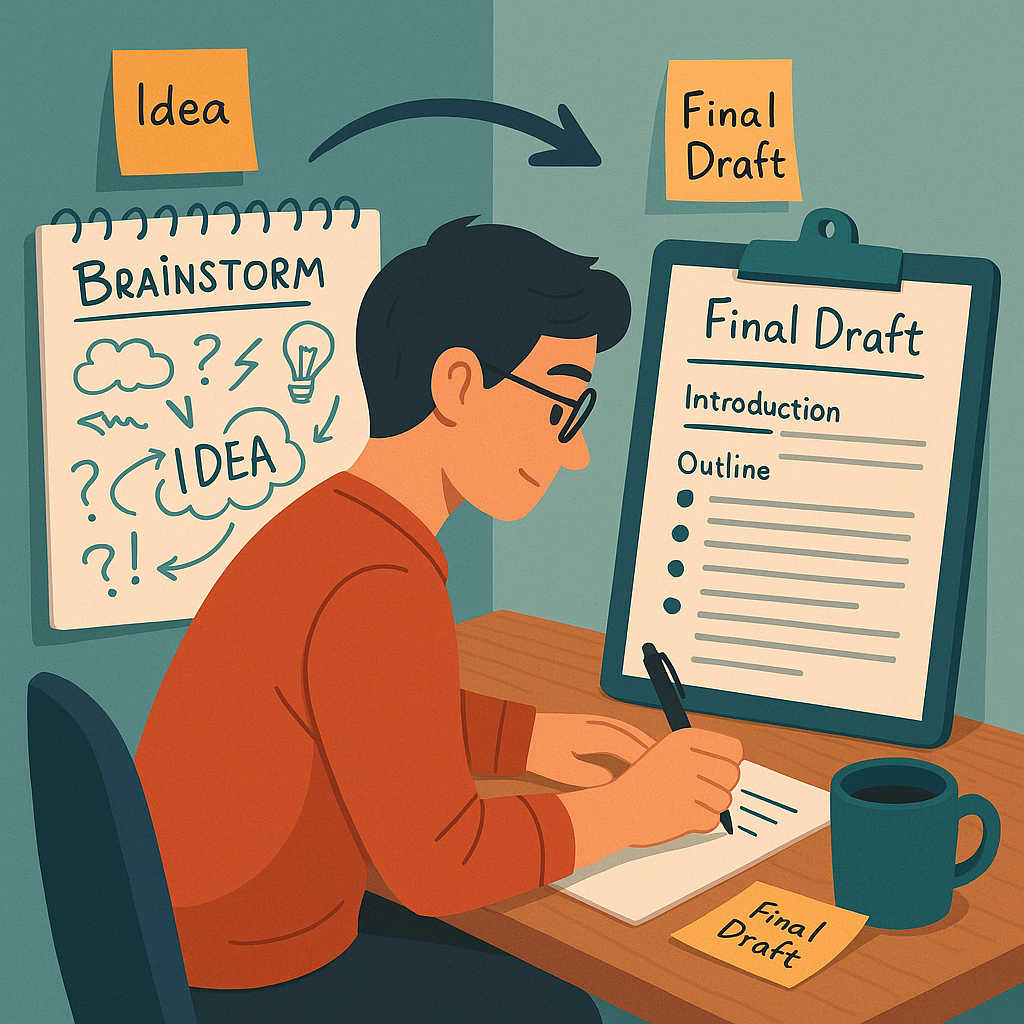
Every writer, at some point, struggles with turning a vague idea into a coherent, engaging piece of writing. Whether you’re writing a blog post, an academic paper, or marketing copy, transforming scattered thoughts into a clear text is a critical skill.
In this article, you’ll learn practical techniques for refining your ideas and translating them into well-structured, reader-friendly content.
Why Ideas Feel Vague
Before learning how to clarify your thoughts, it helps to understand why ideas often start vague:
- Lack of research or background knowledge
- Too many scattered thoughts at once
- Fear of getting started (perfectionism)
- Overthinking or second-guessing
- Trying to write without a clear purpose
Recognizing these barriers is the first step toward overcoming them.
Steps to Turn Vague Ideas into Clear Writing
1. Clarify Your Purpose
Start by asking yourself:
- What’s the main message I want to communicate?
- Who is my target audience?
- What action do I want the reader to take?
Having clear answers will give your writing direction.
Example:
If your topic is “Healthy Eating,” decide:
Am I informing, persuading, or entertaining?
2. Do a Brain Dump
Write down all thoughts related to your topic—without worrying about organization, grammar, or logic. Just let your ideas flow onto the page.
Tip:
Set a timer for 5–10 minutes and don’t stop writing until it rings.
3. Group Related Ideas
Once you’ve dumped your thoughts, look for patterns. Group similar ideas under potential subheadings.
Example:
For a blog about healthy eating:
- Benefits of healthy eating
- Tips for meal planning
- Common mistakes to avoid
4. Create a Simple Outline
Organize your grouped ideas into a logical sequence.
Basic outline structure:
- Introduction
- Main point 1
- Main point 2
- Main point 3
- Conclusion or Call to Action
Tip:
Your outline doesn’t need to be detailed—just enough to give structure.
5. Focus on One Idea per Paragraph
Each paragraph should focus on a single main idea, starting with a clear topic sentence.
Example:
“One of the biggest benefits of healthy eating is increased energy levels.”
Then, support that sentence with examples, data, or further explanation.
6. Use Clear and Simple Language
Avoid jargon, long-winded sentences, and vague phrases. Write as if you’re explaining your ideas to someone unfamiliar with the topic.
Example:
Instead of: “Implementing nutritional alterations can lead to enhanced physiological performance.”
Write: “Eating healthier can boost your energy and improve how your body functions.”
7. Revise and Refine
After your first draft:
- Cut unnecessary words
- Fix grammar and spelling errors
- Clarify awkward sentences
- Make sure each paragraph flows logically into the next
Use tools like Grammarly or Hemingway Editor to help.
8. Seek Feedback
If possible, ask a friend, colleague, or editor to review your text. They can help spot unclear parts you might overlook.
9. Read It Aloud
Reading your text out loud helps you catch awkward phrasing, unclear sentences, and grammatical issues.
10. Let It Rest, Then Edit Again
Take a short break before your final edit. Fresh eyes will help you spot areas that need improvement.
Tools That Can Help
- Mind Mapping Tools: Like MindMeister or XMind for organizing ideas visually.
- Outliner Apps: Like Workflowy or Dynalist.
- Grammar and Clarity Checkers: Grammarly, Hemingway Editor.
- Note Apps: Evernote, Notion, or Google Keep for capturing initial ideas.
Common Mistakes to Avoid
- Trying to be perfect from the start: Focus on getting ideas out first, then edit later.
- Ignoring audience needs: Always tailor content to your readers.
- Overcomplicating sentences: Keep language simple and direct.
- Neglecting structure: Even informal writing needs logical flow.
The Benefits of Turning Ideas into Clear Text
By mastering this process, you’ll:
- Boost your writing speed and confidence
- Improve the quality of your drafts
- Communicate ideas more effectively
- Engage your readers better
The next time you’re stuck with a vague idea, follow these steps to transform it into a polished and impactful piece of writing.