
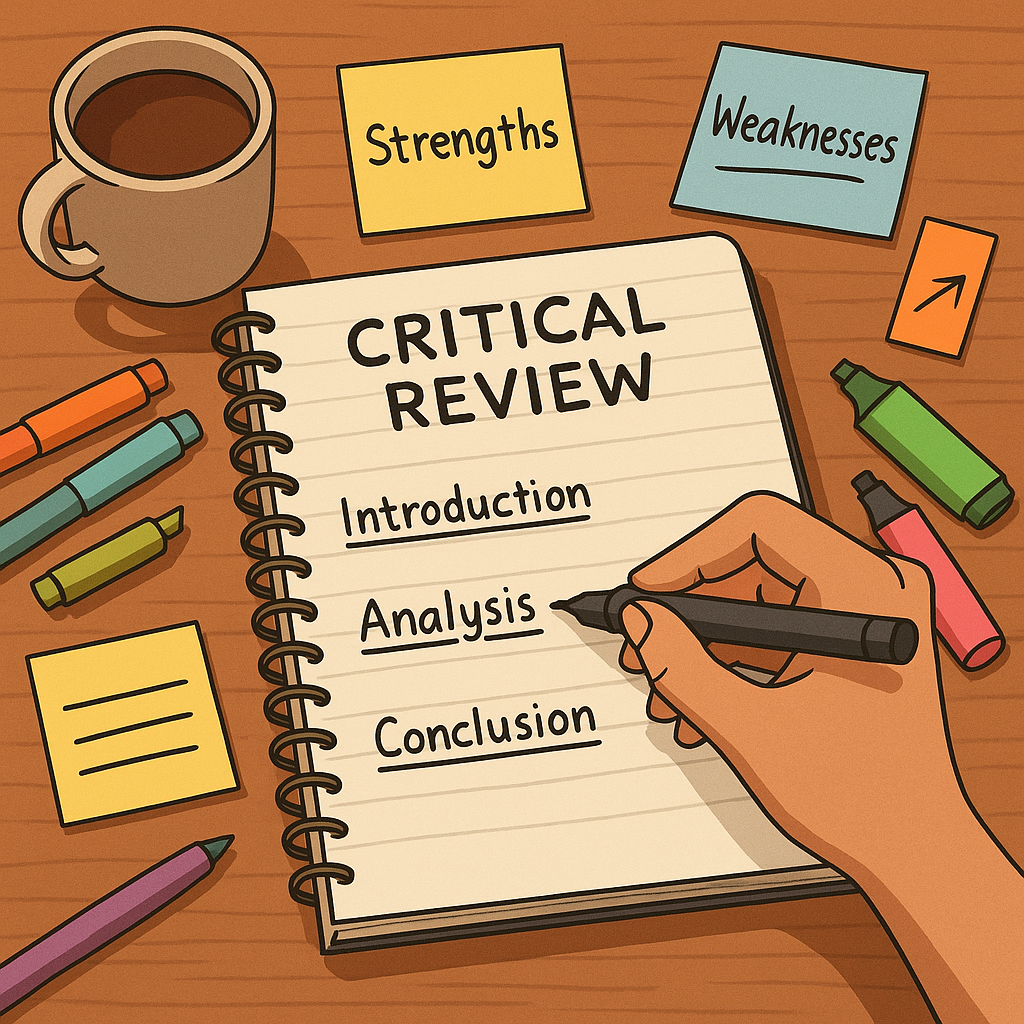
Writing a critical review involves more than just sharing your opinion—it requires careful analysis, structured reasoning, and balanced evaluation. Whether you’re reviewing a book, movie, academic article, or product, an effective critical review helps readers understand both the strengths and weaknesses of the subject.
In this article, you’ll learn how to craft critical reviews that are insightful, objective, and engaging.
What Is a Critical Review?
A critical review is a form of writing that assesses and evaluates a work in detail. Unlike casual reviews or opinion pieces, a critical review:
- Analyzes content thoroughly
- Identifies strengths and weaknesses
- Provides evidence to support evaluations
- Maintains a balanced and objective tone
- Offers constructive feedback
Key Components of a Critical Review
1. Introduction
Start with a brief overview of the subject you’re reviewing. Include:
- Title and author/creator
- Purpose of the work
- Context (publication date, genre, relevance)
- Your overall impression (without going into detail yet)
Example:
“In her 2022 novel Echoes of Silence, author Jane Smith explores themes of loss and resilience, offering a poignant narrative set in post-war Europe.”
2. Summary of the Work
Before presenting your analysis, provide a concise summary of the work. This helps readers unfamiliar with the subject understand the context.
Tip: Keep this section brief and factual—avoid inserting opinions at this stage.
3. Critical Analysis
This is the heart of your review. Evaluate different aspects of the work, such as:
- Structure and organization
- Style and tone
- Strength of arguments or storytelling
- Evidence and research quality (for academic works)
- Character development (for novels and films)
- Visual and auditory elements (for multimedia content)
For each point:
- Provide specific examples
- Explain how these elements contribute to or detract from the overall quality
Example:
“The narrative structure, while emotionally engaging, sometimes lacks clarity due to frequent time jumps, which may confuse readers.”
4. Evaluation of Strengths
Highlight the positive aspects of the work.
Example:
“Smith’s ability to evoke raw emotion through vivid imagery stands out, making the novel’s key scenes particularly memorable.”
5. Discussion of Weaknesses
Point out areas where the work could improve. Be constructive and avoid overly harsh language.
Example:
“However, the pacing in the middle chapters slows significantly, potentially testing the reader’s patience.”
6. Conclusion
Summarize your overall assessment and state your final recommendation.
Example:
“Overall, Echoes of Silence offers a compelling emotional journey, despite minor pacing issues. It’s recommended for readers who appreciate character-driven historical fiction.”
Tips for Writing an Effective Critical Review
Stay Objective
Focus on the work itself, not the author or creator personally.
Provide Evidence
Back your opinions with examples, quotes, or specific observations.
Use Clear and Precise Language
Avoid vague statements like “It was good” or “I didn’t like it.” Explain why.
Balance Praise and Criticism
Offer a fair evaluation, addressing both strengths and weaknesses.
Follow Formatting Guidelines
If your review is for academic or professional purposes, adhere to required formatting styles (APA, MLA, Chicago, etc.).
Proofread Before Submitting
Ensure your review is free of spelling, grammar, and formatting errors.
Common Mistakes to Avoid
- Being Too Emotional: Keep the tone analytical, not overly emotional or subjective.
- Ignoring the Audience: Consider who will read your review and adjust your language accordingly.
- Lack of Structure: Follow a clear format with headings and logical flow.
- Generalizations: Avoid sweeping statements without evidence.
Types of Critical Reviews You Can Write
- Book reviews
- Movie and TV show reviews
- Product reviews
- Academic article critiques
- Performance reviews (theater, music, dance)
- Art exhibition reviews
- Restaurant or food reviews
Example Outline of a Critical Review
- Title: Review of Echoes of Silence by Jane Smith
- Introduction: Overview and thesis
- Summary: Brief plot or content description
- Analysis: Detailed examination of key elements
- Evaluation: Discuss strengths and weaknesses
- Conclusion: Overall assessment and recommendation
The Long-Term Benefits of Mastering Critical Review Writing
Learning how to write effective critical reviews will sharpen your analytical thinking, improve your writing skills, and enhance your ability to assess quality in various forms of media and literature.
Whether you’re a student, a blogger, or a professional reviewer, applying these techniques will help you create reviews that inform, engage, and influence your audience.