
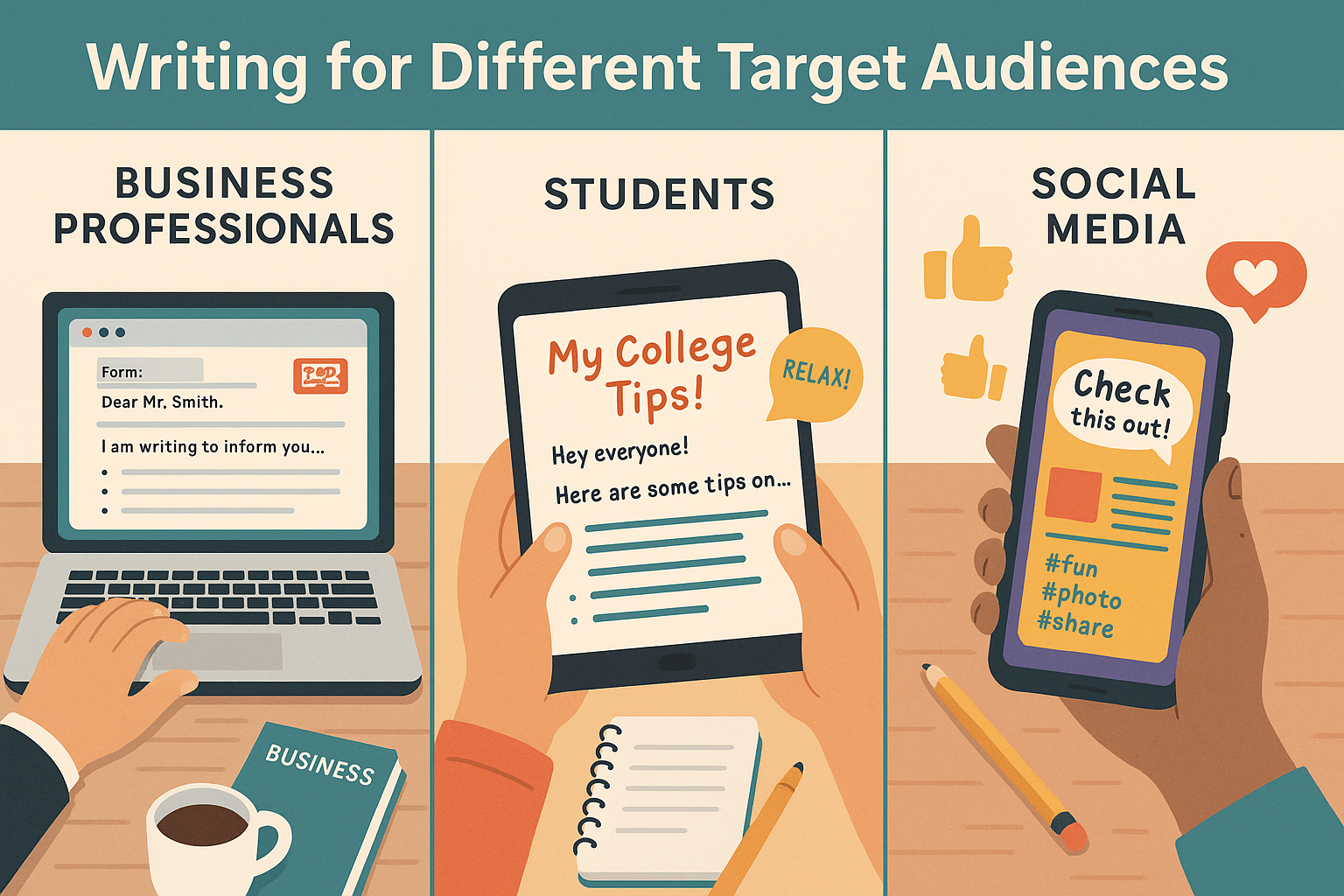
One of the most valuable skills a writer can develop is the ability to tailor content to suit different target audiences. Whether you’re crafting marketing copy, blog posts, academic papers, or business communications, understanding who you’re writing for allows you to create more engaging, relevant, and effective messages.
In this article, you’ll learn actionable techniques for adapting your writing to meet the needs and preferences of diverse audiences.
Why Adapting Your Writing Matters
Different audiences have different:
- Needs
- Interests
- Knowledge levels
- Communication preferences
By adapting your tone, language, structure, and style, you can:
- Increase engagement
- Improve understanding
- Build trust
- Encourage desired actions (clicks, purchases, sign-ups, etc.)
Steps to Identify Your Target Audience
1. Analyze Demographics
Understand age, gender, location, education level, and occupation.
Example:
Writing for teenagers will require a different tone and vocabulary compared to writing for corporate executives.
2. Understand Psychographics
Know your audience’s values, interests, attitudes, and lifestyle.
Example:
A fitness blog audience may respond better to motivational and energetic language.
3. Determine Knowledge Level
Adjust the complexity of your language and the amount of background information based on how familiar your audience is with the topic.
Example:
A beginner’s guide to SEO would explain basic terms, while content for experts could dive into advanced strategies.
4. Define Audience Needs and Pain Points
What problem are they trying to solve? What information are they looking for?
Example:
A customer researching skincare might want information about ingredients, benefits, and results.
Techniques for Adapting Your Writing Style
1. Adjust Tone and Voice
For a Professional Audience:
Maintain a formal, authoritative tone.
Example:
“Our comprehensive analysis highlights key market trends.”
For a Casual Audience:
Be conversational and friendly.
Example:
“Let’s dive into what’s trending in the market right now.”
2. Modify Vocabulary and Jargon
For Experts:
You can use industry-specific terminology and advanced concepts.
For General Audiences:
Simplify terms and explain technical concepts.
Example:
- Technical: “Implement a responsive CSS grid system.”
- Simplified: “Design a website layout that adjusts to different screen sizes.”
3. Adapt Content Length and Structure
For Busy Professionals:
Use bullet points, concise paragraphs, and bold headings for skimming.
For In-Depth Readers:
Provide detailed explanations, case studies, and thorough analysis.
4. Select Appropriate Examples
For Students:
Use relatable academic or campus life examples.
For Business Leaders:
Incorporate business case studies and industry data.
5. Use the Right Formatting
For Online Audiences:
- Short paragraphs
- Bullet lists
- Subheadings
- Clear CTAs (Calls-to-Action)
For Print or Academic Audiences:
- Longer paragraphs
- Formal citations
- Structured sections
How to Maintain Audience Engagement
- Ask questions: Encourage interaction.
- Use storytelling: Share relatable anecdotes.
- Provide actionable insights: Offer clear steps or solutions.
- Include visuals: Charts, infographics, and images can enhance understanding (especially for online audiences).
Examples of Audience Adaptation
Topic: Benefits of Regular Exercise
- For Fitness Enthusiasts:
“Maximize your gains with our advanced workout routines designed for peak performance.” - For Beginners:
“Start your fitness journey with simple exercises that improve your health and boost your mood.” - For Health Professionals:
“Clinical studies confirm that regular exercise reduces the risk of cardiovascular diseases by 30%.”
Tools to Help Adapt Your Writing
- Grammarly Tone Detector: Analyzes tone suitability.
- Hemingway Editor: Helps adjust reading level and complexity.
- Google Analytics & Social Insights: Understand audience demographics and interests.
- Survey Tools: Collect feedback directly from your audience.
Common Mistakes to Avoid
- One-Size-Fits-All Writing: Don’t assume all audiences will respond the same way.
- Ignoring Cultural Differences: Tailor language and references for international audiences when needed.
- Overusing Jargon: Even expert audiences appreciate clear communication.
- Neglecting Formatting: Presentation matters as much as content.
Long-Term Benefits of Audience-Centered Writing
By consistently adapting your writing for different audiences, you’ll:
- Build stronger connections with readers
- Increase conversion rates for marketing content
- Enhance engagement metrics (like time on page and shares)
- Improve reader satisfaction and retention
Mastering this skill will make you a more versatile and effective communicator across any platform or industry.