
Writing clear and engaging content starts with strong paragraph structure. Well-crafted paragraphs help organize your ideas, making your writing easier to read and understand. Whether you’re writing blog posts, academic essays, business reports, or web content, mastering paragraph structure is essential for effective communication.
In this article, we’ll explore practical techniques to help you build perfect paragraphs that keep your readers engaged.
What Is a Paragraph?
A paragraph is a group of related sentences that focus on a single main idea. Each paragraph should serve a specific purpose, providing clarity and flow to your writing.
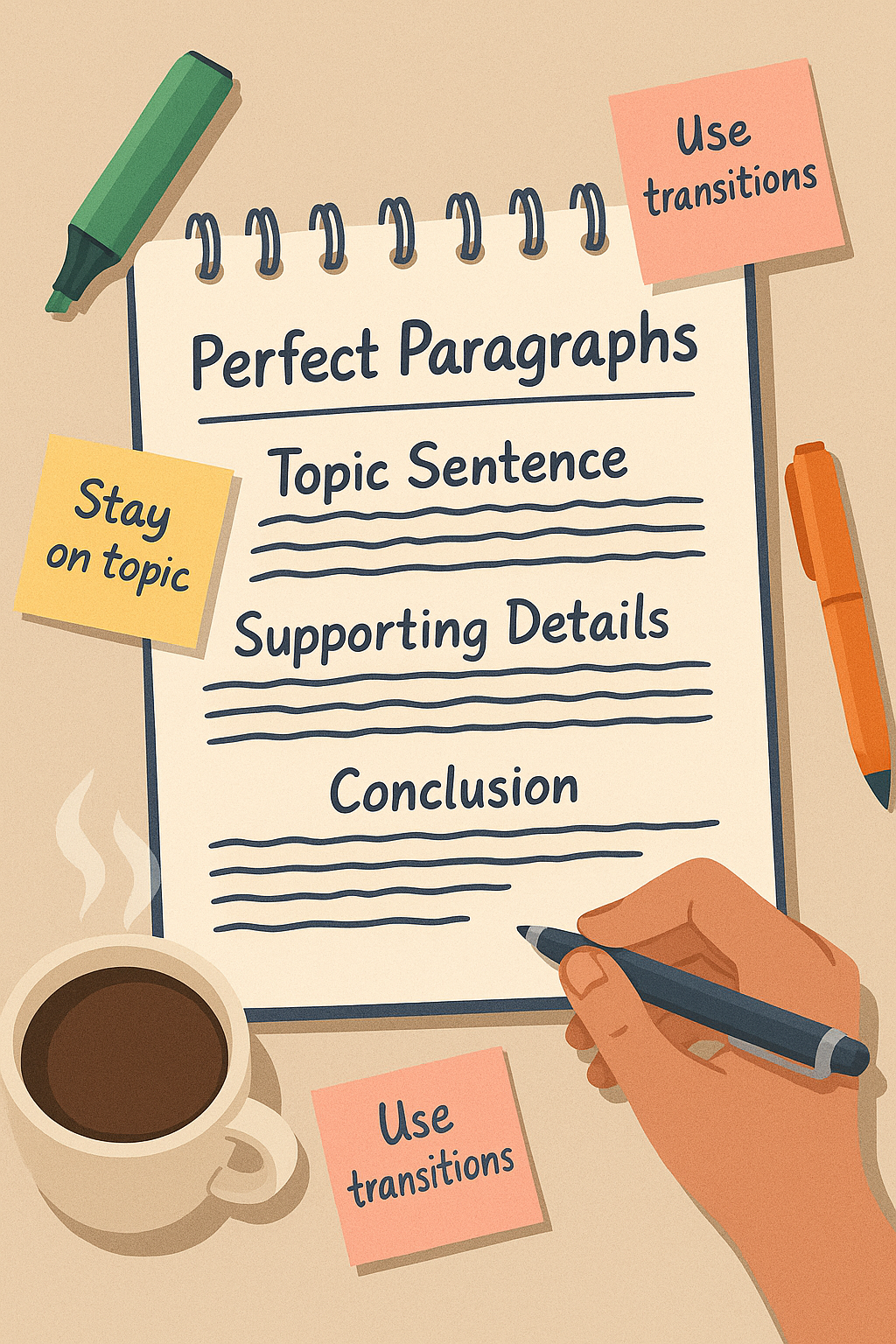
A well-structured paragraph typically contains:
- Topic Sentence: Introduces the main idea.
- Supporting Sentences: Provide evidence, examples, or further explanation.
- Concluding Sentence: Summarizes the point or transitions to the next paragraph.
Why Paragraph Structure Matters
Good paragraph structure:
- Enhances readability
- Improves logical flow
- Helps readers follow your argument
- Keeps content organized and focused
- Increases engagement and comprehension
Poorly structured paragraphs can confuse readers, weaken your arguments, and reduce the overall quality of your writing.
Key Elements of a Well-Structured Paragraph
1. Clear Topic Sentence
Start each paragraph with a topic sentence that clearly communicates the main idea.
Example:
“Strong paragraph structure is essential for creating clear and engaging writing.”
This sentence tells the reader what the paragraph will discuss.
2. Relevant Supporting Sentences
After the topic sentence, include supporting details such as facts, examples, statistics, or explanations. These sentences develop the idea introduced in the topic sentence.
Example:
“For instance, breaking large blocks of text into smaller paragraphs makes the content more visually appealing and easier to digest.”
3. Logical Flow and Coherence
Your sentences should flow logically from one to the next. Use transition words like:
- Additionally
- Furthermore
- However
- For example
- In contrast
These transitions help guide the reader smoothly through your points.
4. Concluding or Transition Sentence
End each paragraph with a concluding sentence that reinforces the main idea or provides a link to the next paragraph.
Example:
“By mastering paragraph structure, writers can enhance the readability and impact of their content.”
Types of Paragraphs
1. Narrative Paragraphs
Tell a story or recount an event.
Example:
“Last summer, I traveled to Italy, where I experienced the rich culture and delicious cuisine.”
2. Descriptive Paragraphs
Provide vivid descriptions of a person, place, or thing.
Example:
“The garden was full of vibrant flowers, their colors bursting with life under the morning sun.”
3. Expository Paragraphs
Explain a concept or provide information.
Example:
“Photosynthesis is a process by which plants convert sunlight into energy.”
4. Persuasive Paragraphs
Aim to convince the reader of a particular point of view.
Example:
“Implementing remote work policies can increase productivity and employee satisfaction.”
Tips for Writing Strong Paragraphs
Keep Paragraphs Focused
Stick to one main idea per paragraph. Avoid mixing unrelated topics within the same paragraph.
Maintain Appropriate Length
While there’s no strict rule, most paragraphs contain 3 to 7 sentences. Shorter paragraphs work better for online content to improve readability.
Use Varied Sentence Structures
Vary your sentence length and structure to keep your writing interesting and dynamic.
Example:
Short sentence: “Writing is powerful.”
Longer sentence: “By learning to structure paragraphs effectively, you can communicate your ideas more clearly and persuasively.”
Edit for Clarity
After writing, review each paragraph to ensure it stays on topic and flows logically.
Practice Paragraph Unity
All sentences within the paragraph should relate directly to the main idea presented in the topic sentence.
Common Mistakes to Avoid
- Run-on Paragraphs: Don’t cram too many ideas into one paragraph.
- Disconnected Sentences: Ensure your sentences are logically connected.
- Lack of Evidence: Always support your statements with relevant examples or facts.
- Overly Long Paragraphs: Long blocks of text can overwhelm readers.
Practical Exercises for Improving Paragraph Writing
- Paragraph Expansion: Take a simple sentence and develop it into a full paragraph with examples and explanations.
- Topic Sentence Practice: Write topic sentences for various topics and build paragraphs around them.
- Editing Practice: Review old writing samples and improve paragraph structure.
How Perfect Paragraphs Improve Overall Writing
Strong paragraphs serve as building blocks for your entire piece. They help maintain reader interest, support your arguments, and create a smooth reading experience.
By focusing on paragraph structure and consistently applying these techniques, you’ll produce writing that’s more coherent, persuasive, and enjoyable to read.